

News Center
Popular products

Sales Department Tel:
0512-52836238
0512-52836128
0512-52358728
Sales Department Fax
0512-52836278
Sales Department Email
xu@worldbrom.com
Purchasing Department Tel/ Fax
0512-52836228
Headquarters Address US Office
, No. 18 Haitian Road, Advanced Material Industrial Park, Changshu City, Jiangsu
Tel
+1 832-857-1028
U.S. office mailbox
Lauren@worldbrom.com
shelia@worldbrom.com
U.S. office address
Creekside Park, The Woodlands, Texas 77375, USA
corporate website
www.worldbrom.com
Procurement Hotline
0512-52836128
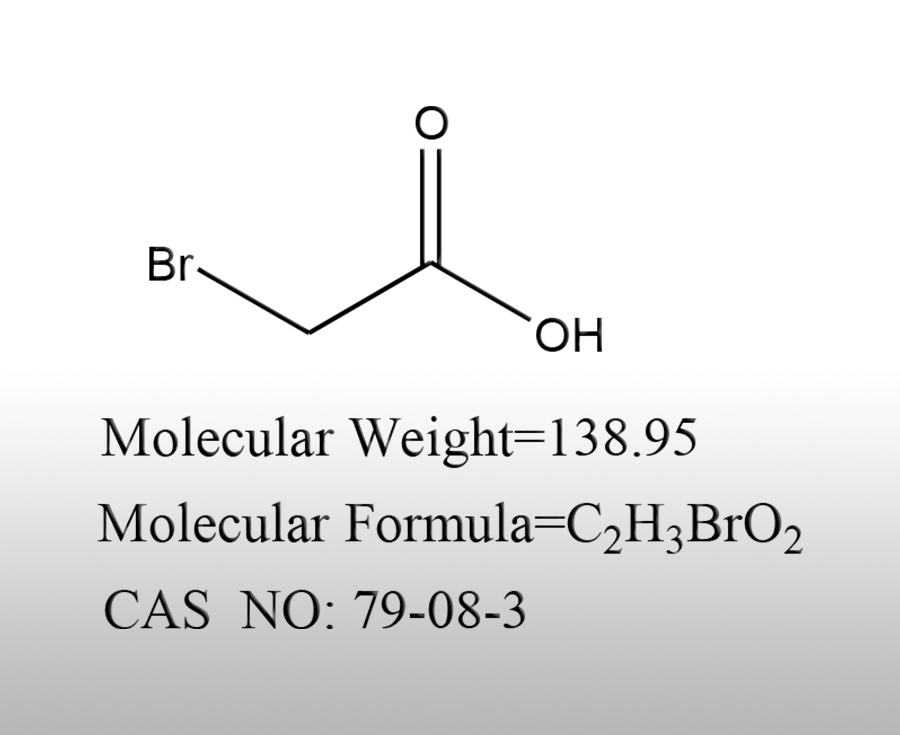
What are the main detection indicators of bromoacetic acid
Bromoacetic acid is a chemical organic raw material commonly used in organic synthesis, pharmaceuticals, and pesticide intermediates. Product testing indicators include main content, impurities, and physical and chemical indicators, which are controlled according to industry testing standards for industrial bromoacetic acid. It is the core judgment item for raw material storage, production feeding, and factory inspection.Sources:www.worldbrom.com | PublishDate:2026.11.17
1. Main content of bromoacetic acid (mass fraction)
Core indicators, detected by titration or gas chromatography, are generally required to be ≥ 98.0% for industrial superior products and ≥ 96.0% for qualified products; Low content indicates insufficient effective components, which will directly affect the conversion rate of downstream synthesis reactions and increase by-products.
2. Moisture
Karl Fischer method for determination. Excessive moisture can accelerate the hydrolysis of bromoacetic acid and corrode equipment, affecting the subsequent synthesis reaction system.
3. Free acids (acetic acid, hydrobromic acid)
Focus on controlling free hydrobromic acid and residual acetic acid. Hydrobromic acid is a highly corrosive impurity, and its high content can exacerbate equipment corrosion and cause side reactions; Acetic acid impurities will increase the difficulty of separation and purification.
4. Burning residue (ash content)
Characterize inorganic salt impurities and reflect the metal ions and insoluble substances introduced during the production process; High ash content can easily cause downstream catalyst poisoning.
5. Chromaticity
Visual colorimetric or platinum cobalt colorimetric testing. Bromoacetic acid is a white crystal in its natural color, with yellow and brown coloration exceeding the standard, indicating that oxidation decomposition has occurred and the quality has deteriorated.
6. Melting point range
Bromoacetic acid has a fixed melting point range, and a wider or shifted melting point range indicates a higher impurity content and a decrease in purity.
7. Relevant organic impurities (such as dibromoacetic acid)
Chromatographic detection of by-products such as dibromoacetic acid and halogenated organic acid impurities, which are strictly controlled by pharmaceutical and synthetic customers, can affect the purity of downstream products.
8. Supporting Instructions
Bromoacetic acid is a highly corrosive and toxic hazardous chemical, and protection must be taken during the entire sampling and testing process; The indicator limits for different customers (pesticides, pharmaceutical intermediates) will be adjusted according to downstream process requirements.
Relevant articles
Related products
Recommended keywords:sodium bromate sodium bromide ammonium bromide sodium bromidesodium bromate potassium bromate Bronopol Bromine compounds worldbrom
Jiangsu Sodium Bromide | Shandong Sodium Bromide | Henan Sodium Bromide | Guangdong Sodium Bromide | Beijing Sodium Bromide | Anhui potassium bromide | Jiangsu Potassium Bromide | Shandong potassium bromide
Henan Sodium Bromate | Guangdong Sodium Bromate | Beijing Sodium Bromate | Anhui Sodium Bromate | Jiangsu ammonium bromide | Shandong ammonium bromide | Henan ammonium bromide |Guangdong Sodium Bromide| Beijing Sodium Bromide | Anhui Sodium Bromide
List labels:bromide sodium bromate Organic bromine sodium bromide sodium bromide calcium bromide ammonium bromide sodium bromate potassium bromate bromoacetic acid Bronopol
Copyright © 2021 Jiangsu Wode Chemical Co., Ltd

技术支持:Lange