
News Center

0512-52836238
0512-52836128
0512-52358728
Sales Department Fax
0512-52836278
Sales Department Email
xu@worldbrom.com
Purchasing Department Tel/ Fax
0512-52836228
Headquarters Address US Office
, No. 18 Haitian Road, Advanced Material Industrial Park, Changshu City, Jiangsu
Tel
+1 832-857-1028
U.S. office mailbox
Lauren@worldbrom.com
shelia@worldbrom.com
U.S. office address
Creekside Park, The Woodlands, Texas 77375, USA
corporate website
www.worldbrom.com
Procurement Hotline
0512-52836128Sources:www.worldbrom.com | PublishDate:2026.05.26
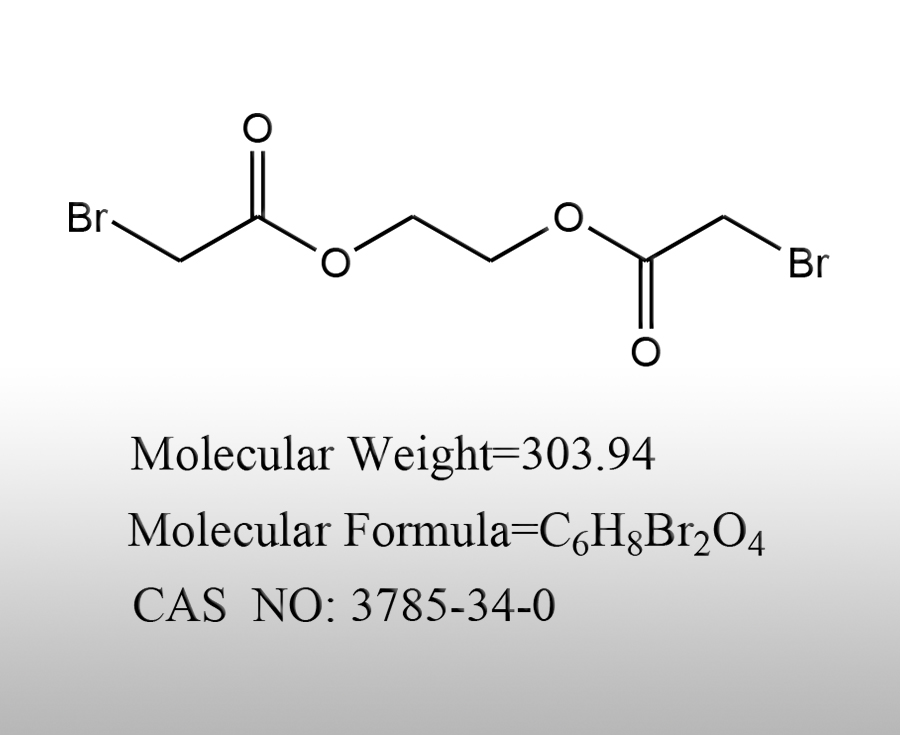
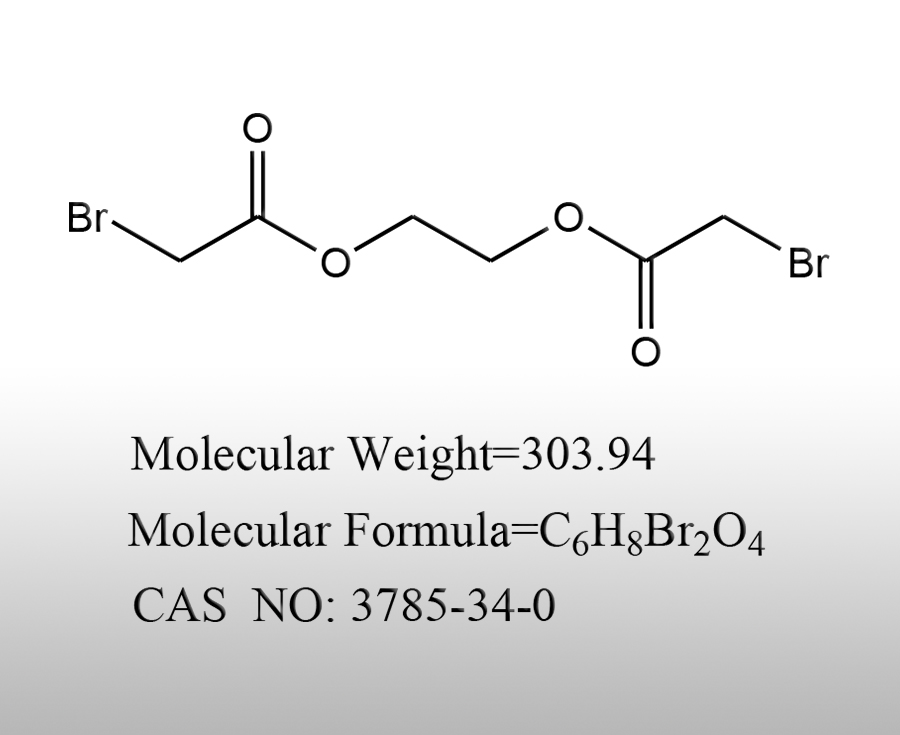
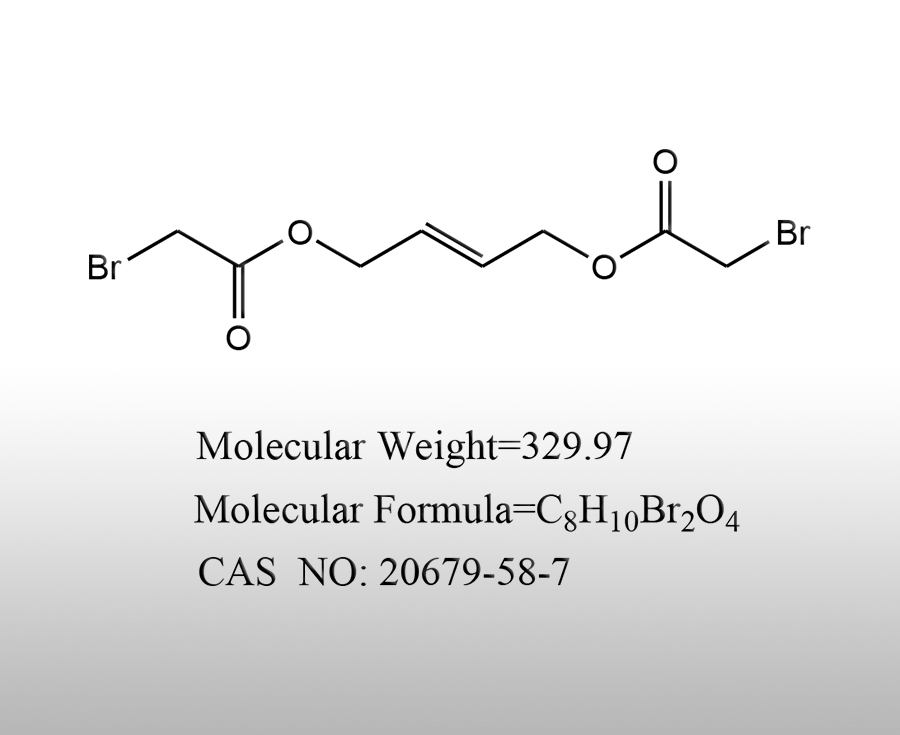
The core value of 1,2-bis (bromoacetoxy) ethane (BBAE) in the field of polymers is its dual functional group ATRP initiator+crosslinking/chain extender, which is used for synthesizing block/star shaped polymers, constructing crosslinked networks, and functionalizing materials.
1、 Core Structure and Operating Principle
Molecular formula: C ₆ H ₈ Br ₂ O ₄, symmetrical double bromoester structure, with one α - bromoester group (- OCOCH ₂ Br) at each end.
Key system:
ATRP initiation site: Bromine atoms can undergo homolysis under Cu ⁺/ligand catalysis, generating carbon radicals and initiating controlled radical polymerization of vinyl monomers (acrylic esters, styrene, etc.).
Bifunctional group symmetry: Two polymer chains are triggered at once to synthesize ABA triblock copolymers in one step, with controllable molecular weight and narrow distribution (PDI<1.2).
High reactivity: The bromine of α - bromoesters is easily released, with a higher initiation efficiency than alkyl chloride/bromine, and mild reaction conditions (room temperature~80 ℃).
2、 Main application scenarios
1. Controllable radical polymerization (ATRP) initiator
ABA triblock copolymer: a ethylene glycol chain segment with BBAE in the middle and A blocks growing synchronously at both ends; Replace the monomer to grow the middle B block, which is used as a carrier for thermoplastic elastomers and amphiphilic micelles.
Star shaped polymer: BBAE is a bifunctional core, combined with multifunctional monomers to prepare 2-arm and 4-arm star shaped polymers for drug sustained release and nanocarriers.
Chain extension and end group modification: Bromine end groups can further trigger a second monomer or undergo nucleophilic substitution with amino, hydroxyl, or thiol groups, introducing fluorescent and targeting groups.
2. Crosslinking agents and network construction
Hydrogel/elastomer cross-linking: copolymerize with double bond monomer (such as PEGDA) to form a covalent cross-linking network to improve the strength and solvent resistance of gel; Used for biomedical dressings and flexible sensors.
Polymer microspheres/nanospheres: participate in suspension/lotion polymerization as cross-linking agent to prepare porous microspheres for adsorption separation and drug loading.
3. Functional polymer intermediates
Brominated polyester/polyether: condensed with diols/amines, introducing bromine atoms into the main chain to enhance flame retardancy and adhesion, used in coatings and adhesives.
Ionic polymer: Bromine end groups react with tertiary amines/imidazoles to form quaternary ammonium salts, which are used to prepare cationic polyelectrolytes for antibacterial materials and flocculants.
3、 Advantages compared to other initiators
Symmetrical Double Triggering Point: Single molecule Double Triggering, one-step dual terminal active chain, no need for stepwise synthesis, high efficiency.
Controllable structure: ATRP characteristics ensure narrow molecular weight distribution, uniform chain segment length, and stable material properties.
Multi functional derivatives: Bromine end groups have both initiating and post modifying abilities, and can graft multiple functional groups to meet the needs of little materials.
Good solubility: soluble in common organic solvents (DMF, DMSO, dichloromethane), the reaction system is homogeneous and easy to control.
4、 Typical application cases
Amphiphilic block copolymer: BBAE initiated polymerization of tert butyl acrylate (tBA) to obtain PtBA BAE PtBA; After hydrolysis, PAA-BBAE-PAA is used for pH responsive drug micelles.
High strength hydrogel: BBAE is copolymerized with acrylamide (AM) and PEGDA to form a cross-linked network, and the strength is increased by 5 – 10 times for wearable sensors.
Flame retardant polyester: BBAE is copolymerized with terephthalic acid and ethylene glycol, with bromine in the main chain and a limit oxygen index (LOI) of 28%. It is used for flame retardant fibers and engineering plastics.