
News Center

0512-52836238
0512-52836128
0512-52358728
Sales Department Fax
0512-52836278
Sales Department Email
xu@worldbrom.com
Purchasing Department Tel/ Fax
0512-52836228
Headquarters Address US Office
, No. 18 Haitian Road, Advanced Material Industrial Park, Changshu City, Jiangsu
Tel
+1 832-857-1028
U.S. office mailbox
Lauren@worldbrom.com
shelia@worldbrom.com
U.S. office address
Creekside Park, The Woodlands, Texas 77375, USA
corporate website
www.worldbrom.com
Procurement Hotline
0512-52836128Sources:www.worldbrom.com | PublishDate:2026.10.09
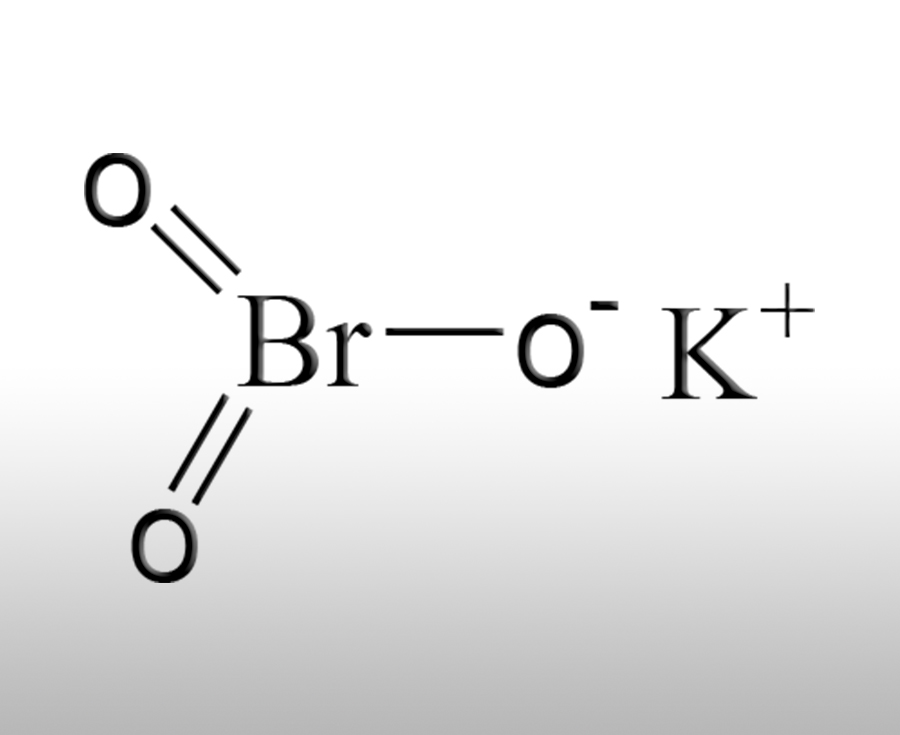
Potassium bromate is a highly oxidizing hazardous chemical with potential health risks. Its use as an additive in the food industry has been banned in China. Currently, its legal applications are concentrated in industrial and laboratory settings such as chemical analysis, textile printing and dyeing, and the corresponding industries are as follows:
1. Chemical reagents and detection analysis industry
Potassium bromate can be used as a reference reagent for oxidation-reduction titration, in laboratory analysis, environmental testing, mineral testing, pesticide and fertilizer analysis, etc. It is used to determine the content of reducing substances such as arsenic, antimony, tin, and ferrous, and can also be used for droplet analysis to determine some metal elements. It is widely used in research institutes, third-party testing laboratories, and chemical quality inspection departments. High purity specifications are commonly used in the preparation of standard solutions and are the basic reagents commonly used in oxidation titration systems.
2. Textile printing and dyeing industry
Can be used as a bleaching agent for protein fibers such as wool and silk, achieving fiber decolorization in specific processes; At the same time, it can serve as an oxidant in the synthesis stage of dyes, participate in the preparation of some azo dyes, and assist in regulating color reactions. The use process requires supporting protection, strict control of dosage and waste liquid treatment process.
3. Chemical industry
As an oxidant used in the organic synthesis of some bromine containing intermediates, it can also be used as a raw material to prepare other bromate chemicals. This scenario has high requirements for raw material purity and reaction condition control, and production needs to comply with hazardous chemical production management standards.
4. Special materials and optoelectronic related fields
A little amount of high-purity products are used for the preparation of precursor materials for special ceramics and optoelectronic materials, which belong to niche application scenarios and are mostly used in research and development or little-scale trial production.
5. Other niche industrial scenes
Can be used for wet metallurgical processes such as mercury purification; Some fireworks formula systems use it as an oxidant component, and this type of scenario requires compliance with hazardous chemical control regulations related to fireworks and firecrackers.