

News Center

0512-52836238
0512-52836128
0512-52358728
Sales Department Fax
0512-52836278
Sales Department Email
xu@worldbrom.com
Purchasing Department Tel/ Fax
0512-52836228
Headquarters Address US Office
, No. 18 Haitian Road, Advanced Material Industrial Park, Changshu City, Jiangsu
Tel
+1 832-857-1028
U.S. office mailbox
Lauren@worldbrom.com
shelia@worldbrom.com
U.S. office address
Creekside Park, The Woodlands, Texas 77375, USA
corporate website
www.worldbrom.com
Procurement Hotline
0512-52836128Sources:www.worldbrom.com | PublishDate:2025.05.28
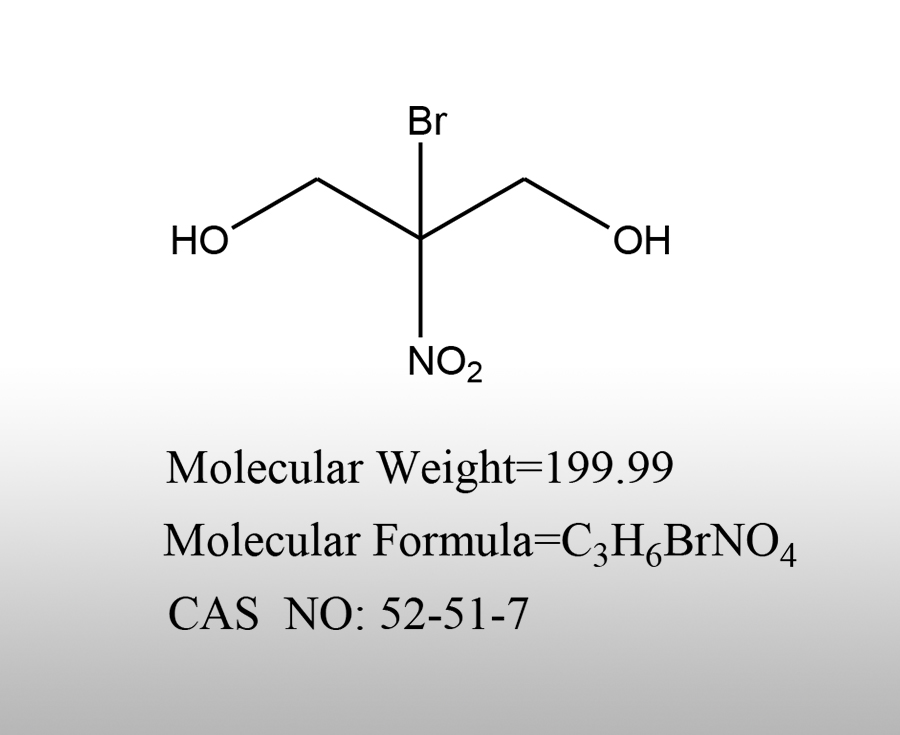
Bronopol, also known as 2-bromo-2-nitro-1,3-propanediol, is an antibacterial and preservative commonly used in toiletries, detergents, coatings, and other fields. The following is a brief description of its main characteristics:
1、 Chemical characteristics
Molecular formula: C ∝ H ₆ BrNO ₄
Appearance: White to off white crystalline powder, odorless or with a slight characteristic odor.
Solubility: Easy to dissolve in water (solubility about 25 g/100 mL, 20 ℃), soluble in organic solvents such as ethanol and propylene glycol, slightly soluble in oils.
Stability: Stable under acidic to neutral conditions (pH 4-8), easily decomposed in high temperature or alkaline environments, releasing formaldehyde and bromide.
2、 Antibacterial properties
1. Principle of action
By releasing formaldehyde and bromide ions, the structure of microbial cells (such as cell membranes, proteins, and nucleic acids) is disrupted, inhibiting the growth and reproduction of bacteria, fungi, and algae.
2. Antibacterial spectrum
It has a strong inhibitory effect on Gram positive bacteria, Gram negative bacteria (such as Escherichia coli, Pseudomonas aeruginosa), and certain fungi, but has a weaker effect on fungi.
3. Active concentration
The commonly used concentration is 0.01% -0.1%, which needs to be adjusted according to the application scenario (such as the allowable concentration in toiletries is usually ≤ 0.1%).
3、 Application features
1. Advantages
Efficient and broad-spectrum: It can quickly inhibit bacteria at low concentrations, especially suitable for inhibiting Microbes in aqueous solutions.
Good compatibility: It can be compatible with most surfactants (such as anionic and nonionic surfactants) and toiletries ingredients (such as alcohols and esters).
Low cost: The synthesis process is mature, the price is relatively low, and it is suitable for large-scale industrial applications.
2. Limitations
Irritation: High concentrations or long-term exposure may irritate the skin and eyes, and some individuals may experience allergic reactions (listed as allergens under EU toiletries regulations).
Formaldehyde release: The decomposition of formaldehyde may lead to safety disputes (especially in the toiletries industry, which must comply with formaldehyde release standards).
Environmental impact: Bromine containing compounds may be toxic to aquatic Creatures, and attention should be paid to wastewater treatment and environmental compliance.
4、 Safety and Regulations
Toxicity: The oral LD of rats is about 180 mg/kg (moderate toxicity), and protection is required for skin contact or inhalation.
Regulatory restrictions:
The EU toiletries Regulation (EC No 1223/2009) allows its use as a preservative, but with a concentration of ≤ 0.1% and must be labeled as "containing formaldehyde".
The US FDA approves its use in toiletries, but it must comply with safety dosage regulations.
Some countries, such as Japan, have restrictions on its use in food contact materials.
5、 Main application areas
toiletries: antisepsis of face cream, lotion, shampoo, shower gel, etc. (concentration and formaldehyde emission shall be strictly controlled).
Industrial field: Antibacterial and mildew resistant coatings, adhesives, cutting fluids, and oilfield water injection systems.
Agriculture and Aquaculture: Once used for mold prevention in livestock and poultry feed, but gradually replaced due to safety controversies.
