

News Center

0512-52836238
0512-52836128
0512-52358728
Sales Department Fax
0512-52836278
Sales Department Email
xu@worldbrom.com
Purchasing Department Tel/ Fax
0512-52836228
Headquarters Address US Office
, No. 18 Haitian Road, Advanced Material Industrial Park, Changshu City, Jiangsu
Tel
+1 832-857-1028
U.S. office mailbox
Lauren@worldbrom.com
shelia@worldbrom.com
U.S. office address
Creekside Park, The Woodlands, Texas 77375, USA
corporate website
www.worldbrom.com
Procurement Hotline
0512-52836128Sources:www.worldbrom.com | PublishDate:2025.12.02
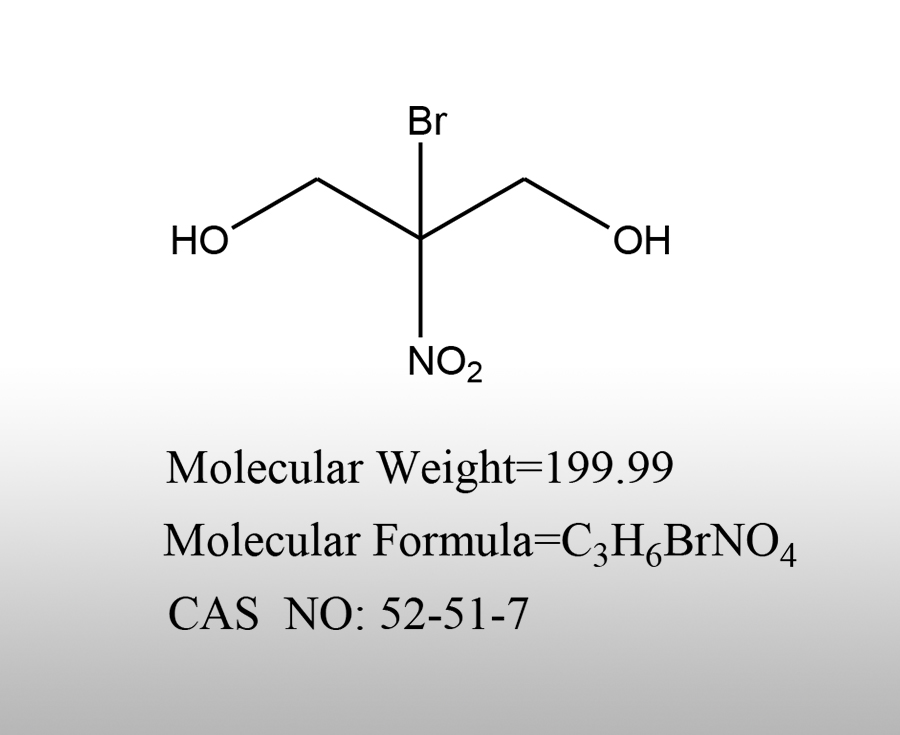
Bromonol (also known as Bropol or Bromonopropanediol) is a broad-spectrum fungicide of bromonitroalcohols, with a CAS number of 52-51. It is a white to pale yellow crystalline powder at room temperature and has the characteristics of high efficiency, low concentration effectiveness, and good water solubility. At the same time, it has a certain degree of irritation to the human body and potential harm to the environment. The following provides a detailed introduction from three aspects: physical and chemical properties, main applications, and safety characteristics:
1、 Physical and chemical properties
The molecular formula of bromonitrol is C ∝ H ₆ BrNO ₄, with a molecular weight of 199.99, a melting point of 130-133 ℃, a boiling point of about 358.0 ± 42.0 ℃, and a solubility of 25g/100mL in water at 22 ℃. It is easily soluble in polar solvents such as ethanol and propylene glycol, but difficult to dissolve in non-polar solvents such as chloroform and acetone. It is stable at room temperature but hygroscopic, incompatible with strong oxidants, strong alkalis, moisture, etc. It is prone to decomposition in pH values greater than 8 or high temperature environments, and can also corrode metals such as aluminum.
2、 Main purpose
Bromine nitrate, due to its broad-spectrum antibacterial activity, can inhibit the growth of most bacteria at a concentration of 25ppm, especially against Gram negative bacteria and Pseudomonas aeruginosa, and is widely used in multiple fields
ornamental industry: As a ornamental preservative, it is commonly used in shampoo, face cream, lotion and other products, with the addition amount of only 0.01% -0.05%. It is one of the compliant preservatives approved by the FDA.
In the industrial field, it is used for sterilization and algae removal in industrial circulating water and cooling water systems, and can also be used as a mold and preservative for paper pulp, coatings, plastics, and wood.
In the agricultural field, it can be used as a seed treatment agent to effectively prevent and control various plant pathogens and bacteria, but should be avoided from being mixed with alkaline pesticides when used.
3、 Security features
Toxicity and Irritation: Bromine nitrate is toxic to the human body and can cause poisoning when ingested orally. It has a moderate irritant effect on the eyes, skin, and mucous membranes and may also lead to congenital abnormalities; The acute oral LD of rats is 180-400mg/kg, and that of mice is 270-400mg/kg.
Environmental hazards: Excessive use can cause harm to water and soil environments, and is classified as a substance harmful to the environment. The hazardous material transport number is UN 3241 4.1/PG 3.
First aid and protection: If discomfort occurs after contact and there is no special antidote, symptomatic treatment is required; Proper protection should be taken during operation to avoid direct contact with skin and eyes. In case of accidental contact, rinse immediately with plenty of water.
