

News Center

0512-52836238
0512-52836128
0512-52358728
Sales Department Fax
0512-52836278
Sales Department Email
xu@worldbrom.com
Purchasing Department Tel/ Fax
0512-52836228
Headquarters Address US Office
, No. 18 Haitian Road, Advanced Material Industrial Park, Changshu City, Jiangsu
Tel
+1 832-857-1028
U.S. office mailbox
Lauren@worldbrom.com
shelia@worldbrom.com
U.S. office address
Creekside Park, The Woodlands, Texas 77375, USA
corporate website
www.worldbrom.com
Procurement Hotline
0512-52836128Sources:www.worldbrom.com | PublishDate:2026.09.22
1、 Chemical composition and ion categories
Sodium bromate belongs to the category of bromate salts, which are oxygen-containing salts with bromate anions and possess strong oxidative properties.
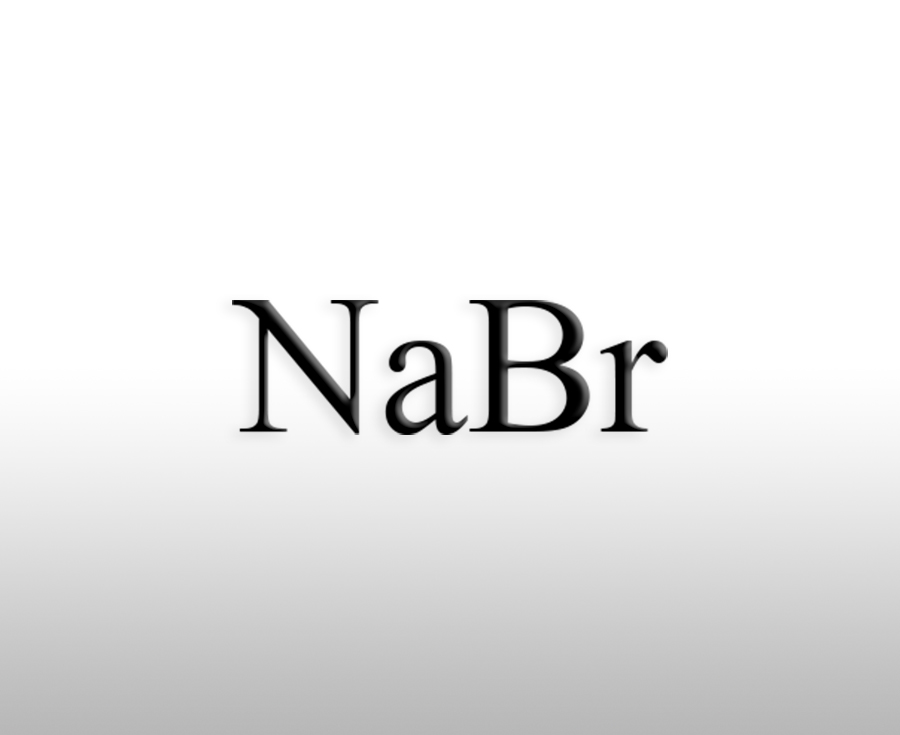
Sodium bromide belongs to bromides and is an anaerobic halide with bromide ions as the anion. It is mainly reducing and lacks strong oxidizing ability.
Sodium chlorate belongs to chlorates, which are oxygen-containing acid salts. The anion is chlorate and it is a strong oxidant.
2、 Redox characteristics (core differences)
Sodium bromate is a strong oxidant with stronger oxidation ability in acidic environments. When it comes into contact with organic matter, sulfur, phosphorus, and reducing agents, it is prone to combustion or explosion. After being heated, it will decompose and release oxygen, while generating toxic fume containing bromide.
Sodium bromide itself does not have oxidizing properties. When encountering strong oxidants, the bromide ions inside will be oxidized to form bromine, which has relatively stable chemical properties and is not classified as an oxidative hazardous chemical.
Sodium chlorate is a strong oxidant with outstanding oxidation performance. It decomposes and releases oxygen at temperatures above 300 degrees Celsius. It is often used as a herbicide and can easily explode when mixed with combustibles.
3、 Appearance and physical characteristics
Sodium bromate is a colorless or white crystalline substance that is easily soluble in water but insoluble in ethanol. It decomposes at high temperatures.
Sodium bromide is a colorless crystal that easily absorbs moisture from the air and undergoes deliquescence. It is soluble in water and its aqueous solution is neutral.
Sodium chlorate is a colorless crystal with a salty and cool taste, easily deliquescent, and high solubility in water. It decomposes and releases oxygen at around 300 degrees Celsius.
4、 Main purpose
Sodium bromate is commonly used as an oxidant in wool bleaching, chemical analysis, ore processing, and organic synthesis in the printing and dyeing industry.
Sodium bromide is used in the production of photographic photosensitive materials, pharmaceutical fields, organic synthesis of brominated reagents, and fragrance synthesis.
Sodium chlorate is mainly used as a herbicide and a raw material for preparing chlorine dioxide. It is also used for bleaching and metallurgy.
5、 Dangerous attributes and toxicity
Sodium bromate is an oxidizing agent that is toxic and can cause damage to the kidneys and nervous system. Inhalation or ingestion can cause significant harm and is classified as a hazardous chemical.
Sodium bromide is a common inorganic salt with low toxicity and is not classified as an oxidative hazardous chemical. Only when ingested in large quantities can it cause bromine poisoning.
Sodium chlorate is a strong oxidant, highly toxic, and can cause hemolytic damage. Ingestion can easily lead to death, and strict control requirements are required.
6、 Storage requirements
When storing sodium bromate and sodium chlorate, they must be kept away from organic matter, reducing agents, sulfur, phosphorus, and grease, and placed separately in a ventilated warehouse. Mixing storage is strictly prohibited.
Sodium bromide storage should mainly be moisture-proof, without the risk of strong oxidation, and should be stored as ordinary inorganic salts.
7、 Simple identification features
After adding sodium bromide to chlorine water, orange red elemental bromine can precipitate.
Sodium bromate combined with acidic potassium iodide will quickly precipitate iodine, and the solution will turn brownish yellow.
Sodium chlorate can also oxidize iodide under acidic conditions, and the three can be distinguished by decomposition products and ion detection.
