
News Center

0512-52836238
0512-52836128
0512-52358728
Sales Department Fax
0512-52836278
Sales Department Email
xu@worldbrom.com
Purchasing Department Tel/ Fax
0512-52836228
Headquarters Address US Office
, No. 18 Haitian Road, Advanced Material Industrial Park, Changshu City, Jiangsu
Tel
+1 832-857-1028
U.S. office mailbox
Lauren@worldbrom.com
shelia@worldbrom.com
U.S. office address
Creekside Park, The Woodlands, Texas 77375, USA
corporate website
www.worldbrom.com
Procurement Hotline
0512-52836128Sources:www.worldbrom.com | PublishDate:2025.08.27
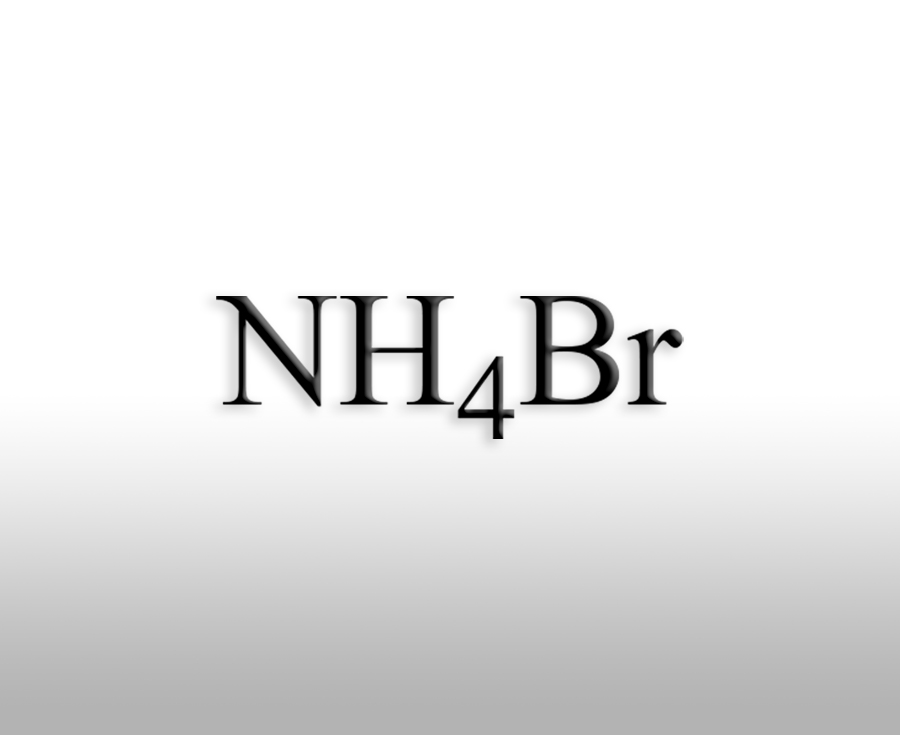
Ammonium bromide (NH ₄ Br) is an inorganic compound that has significant application advantages in specific fields due to its chemical and physical properties. The core advantages can be expanded from its functional scenarios, as follows:
1. As an expectorant: Mild onset and suitable for various respiratory symptoms
In the field of medicine, ammonium bromide is a good expectorant ingredient, and its core advantages are reflected in the practicality of respiratory care:
Friendly process of action: By stimulating the respiratory mucosa, it promotes increased secretion of mucosal glands, dilutes and dilutes thick phlegm, making it easier to be discharged with coughing. The degree of stimulation to the respiratory mucosa is mild, and it is not easy to cause strong discomfort (such as excessive coughing or mucosal damage). It is suitable for short-term use by sensitive populations such as children and the elderly.
Widely applicable scenarios: It can be used for various diseases such as colds, bronchitis, and bronchiectasis that cause symptoms of "thick and difficult to cough up phlegm". It is often compounded with other cough suppressants and asthma relieving ingredients to form compound preparations, which can effectively remove phlegm and relieve respiratory discomfort, with high flexibility in application.
2. As an analytical reagent: strong reaction specificity and high detection accuracy
In chemical analysis and laboratory research, ammonium bromide is a commonly used analytical reagent, with advantages focused on "correct auxiliary substance detection":
Provide stable bromide ion source: Its aqueous solution can stably release Br ⁻, which can be used as a raw material for bromide standard solution, for calibrating detection instruments (such as ion chromatography), or for quantitative analysis of Ag ⁺ in samples (Br ⁻ reacts with Ag ⁺ to form a light yellow AgBr precipitate that is insoluble in nitric acid, and the Ag ⁺ content can be calculated based on the precipitate mass). The reaction has strong specificity and is not easily affected by other ions, resulting in high accuracy of detection results.
Easy to operate: It is a white crystalline powder at room temperature, easily soluble in water, with no complex reactions during the dissolution process, and can quickly prepare reagents of the required concentration, suitable for laboratory batch or rapid detection scenarios.
3. As a flame retardant/fire-resistant material additive: high flame retardant efficiency and good compatibility
In the fields of polymer materials (such as plastics and rubber) and textiles, ammonium bromide can be used as an inorganic flame retardant or fire retardant additive, with advantages reflected in flame retardancy and material compatibility:
Efficient flame retardant process: When heated, it can decompose and produce HBr gas. HBr can capture free radicals (such as OH ·, H ·) during the combustion process, interrupting the combustion chain reaction. At the same time, HBr gas has a higher density than air and can form a "gas film" on the surface of the material, isolating oxygen and quickly suppressing combustion. The flame retardant effect is long-lasting and not easily lost due to material aging.
Strong compatibility: It has good compatibility with most polymer materials (such as polyethylene and polypropylene), and its addition does not easily affect the mechanical properties (such as strength and toughness) or appearance (such as color and transparency) of the material. It does not require significant adjustments to the material production process and is suitable for the flame retardant needs of various plastics and rubber products.
4. As a photosensitive material for photographic film: stable photosensitive performance and excellent imaging quality
In traditional silver salt photography techniques, ammonium bromide is one of the key raw materials for preparing film/paper "photosensitive emulsions", and its core advantages focus on the reliability of photosensitive imaging:
Sensitivity adaptation: Reacts with silver nitrate to generate silver bromide (AgBr), which is the core component of silver salt photosensitive materials. Its sensitivity is moderate (between the "low sensitivity" of silver chloride and the "high sensitivity" of silver iodide), which can meet the light requirements of daily photography (such as civilian film), and can also be adjusted to adapt to the production of films with different sensitivities (ISO) by adjusting the dosage. It has a wide range of applications.
Good imaging stability: AgBr crystal particles prepared from ammonium bromide are uniform, and the latent image formed after exposure is clear. The subsequent development and fixing processes are not prone to problems such as "image blur and fog", which can ensure the imaging quality and storage stability of the film (the finished film can be stored for a long time under dark conditions).
5. Other fields: Low cost, easy to obtain and process
In addition to the core scenarios mentioned above, ammonium bromide also has the general advantages of "economy and ease of operation":
Low preparation cost: In industry, it can be prepared by direct neutralization reaction between ammonia water (NH ∝・ H ₂ O) and hydrobromic acid (HBr). The raw materials are easy to obtain, the reaction process is simple, and the difficulty of large-scale production is low. Compared with some organic bromides (such as brominated hydrocarbons), the cost is more advantageous and suitable for industrial batch application.
Environmental friendliness (relative): As an inorganic bromide, its biodegradability is superior to most organic bromides, and under the premise of reasonable use and treatment (such as avoiding large amounts of discharge into water bodies), the long-term cumulative pollution risk to the environment is low, especially when replacing highly toxic organic flame retardants, which is more in line with environmental trends.