

News Center

0512-52836238
0512-52836128
0512-52358728
Sales Department Fax
0512-52836278
Sales Department Email
xu@worldbrom.com
Purchasing Department Tel/ Fax
0512-52836228
Headquarters Address US Office
, No. 18 Haitian Road, Advanced Material Industrial Park, Changshu City, Jiangsu
Tel
+1 832-857-1028
U.S. office mailbox
Lauren@worldbrom.com
shelia@worldbrom.com
U.S. office address
Creekside Park, The Woodlands, Texas 77375, USA
corporate website
www.worldbrom.com
Procurement Hotline
0512-52836128-
 2026-01-29
What are the main uses of potassium bromate
Potassium bromate (KBrO ∝) is an inorganic strong oxidant, which was once used as a flour improver in the food industry. However, due to safety issues, it has been banned in most countries around the world; At present, its applications are mainly concentrated in non food fields such as industrial oxidants, analytical chemistry, and chemical synthesis. Some niche fields also have compliant applicat
-
 2026-01-21
What are the main characteristics of 2,3-dibromosuccinic acid
As a brominated organic carboxylic acid compound, 2,3-dibromosuccinic acid has four core characteristics: chirality, chemical activity, physical stability, and application adaptability. The specific details are as follows:
-
14 01 2026

What are the application industries of lithium bromide
Lithium bromide is an inorganic compound with strong water absorption, low vapor pressure, and good chemical stability. Its unique physicochemical properties make it important in multiple industrial fields. The core application industries and specific scenarios are as follows:
-
05 01 2026

Brief introduction to 1,2-bis(bromoacetoxy)ethane
1,2-Bis(bromoacetoxy)ethane is a bromine-containing organic ester compound with the chemical formula . Its molecular structure is based on ethylene glycol, with bromoacetoxy groups attached to both ends, exhibiting clear functional group activity.
-
30 12 2025

What are the applications of potassium bromide in the pharmaceutical industry
The core of potassium bromide in the pharmaceutical industry is its ability to calm the nerves and prevent seizures. It can also be used as a pharmaceutical excipient and diagnostic aid. As an old drug, it has strong targeted clinical applications. Below is a breakdown of core medicinal use, excipient application, and precautions to clearly adapt to pharmaceutical research and development/producti
-
23 12 2025

What is the function of calcium bromide
Calcium bromide is an inorganic calcium salt with the chemical formula CaBr ₂, which is easily soluble in water. Its core functions are concentrated in four major fields: oilfield drilling, medicine, refrigeration, and chemical engineering. At the same time, it has auxiliary applications in environmental protection, building materials, and other fields. It is classified and sorted according to its
-
16 12 2025

Which industries are suitable for using potassium bromide
Potassium bromide is a colorless crystalline or white powdery inorganic compound, which has the characteristics of easy solubility in water, stable chemical properties, good transparency, and excellent flame retardancy. It is widely used in multiple industries such as optics, medicine, chemical engineering, and analytical testing. The specific application areas are as follows:
-
09 12 2025

What are the characteristics of lithium bromide
Lithium bromide is a colorless crystalline powder inorganic compound with core characteristics such as strong water absorption, excellent phase transition properties, and stable chemical properties. It is widely used in refrigeration, air conditioning, chemical engineering, and other fields. The specific characteristics are as follows:
-
02 12 2025

What is bromonitrol
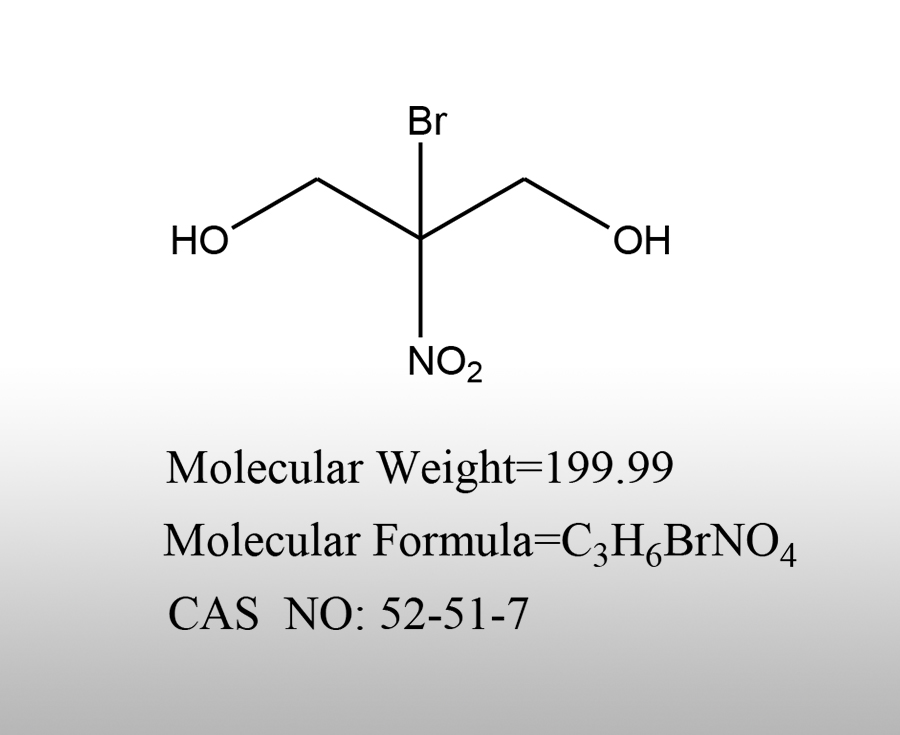
Bromonol (also known as Bropol or Bromonopropanediol) is a broad-spectrum fungicide of bromonitroalcohols, with a CAS number of 52-51. It is a white to pale yellow crystalline powder at room temperature and has the characteristics of high efficiency, low concentration effectiveness, and good water solubility. At the same time, it has a certain degree of irritation to the human body and potential h
-
25 11 2025

What are the advantages of dibromosuccinic acid
Dibromosuccinic acid (DBSA), as a bromine containing organic compound, has demonstrated significant advantages in flame retardancy, organic synthesis, water treatment, and other fields due to its unique chemical structure and physicochemical properties. The core advantages revolve around three dimensions: "high efficiency functionality, environmental compatibility, and application adaptability", a
