
News Center

0512-52836238
0512-52836128
0512-52358728
Sales Department Fax
0512-52836278
Sales Department Email
xu@worldbrom.com
Purchasing Department Tel/ Fax
0512-52836228
Headquarters Address US Office
, No. 18 Haitian Road, Advanced Material Industrial Park, Changshu City, Jiangsu
Tel
+1 832-857-1028
U.S. office mailbox
Lauren@worldbrom.com
shelia@worldbrom.com
U.S. office address
Creekside Park, The Woodlands, Texas 77375, USA
corporate website
www.worldbrom.com
Procurement Hotline
0512-52836128Sources:www.worldbrom.com | PublishDate:2026.07.01
1、 Basic physical properties (pre physical and chemical foundation)
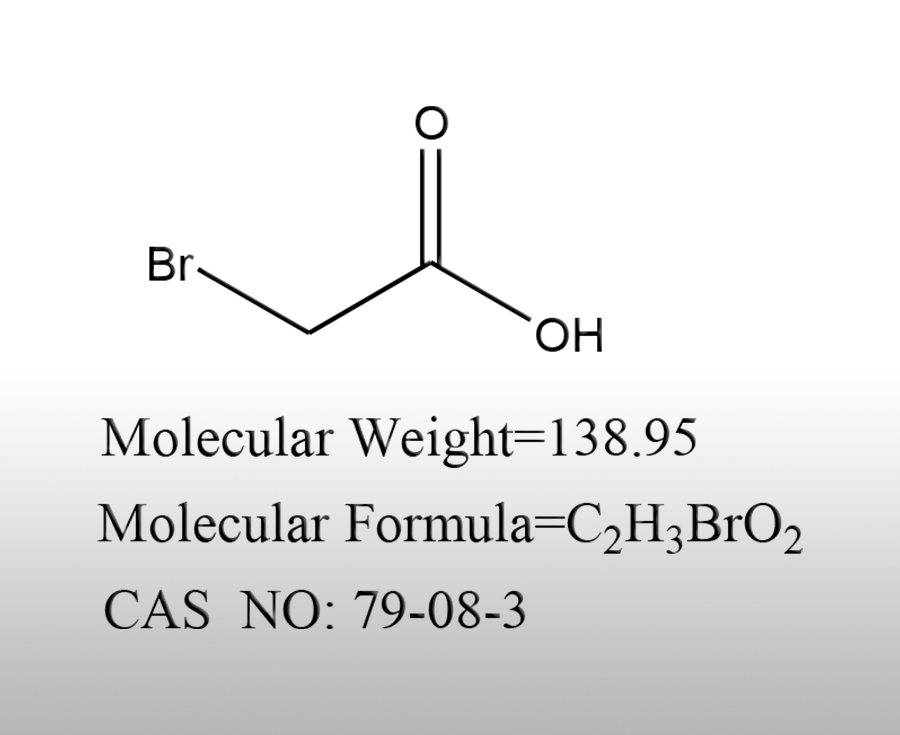
Appearance and moisture absorption: Colorless diamond shaped crystals, highly deliquescent, quickly absorb water and clump when exposed to air; Sensitive to light, long-term exposure may cause slight yellowing and deterioration.
Melting point: Melting point 46~50 ℃, solid state at room temperature, easy to melt at low temperature; Boiling point 208 ℃, stable under atmospheric distillation.
Density: 1.93 g/cm ³, much higher than water.
Solubility: Can mix freely with water; Easily soluble in ethanol, ether, and acetone; Soluble in organic solvents such as benzene and chloroform.
Acidity strength (core indicator): belongs to medium strong acid; Bromine atom exhibits strong electron withdrawing induction effect, with acidity much stronger than acetic acid (pKa=4.76) and slightly stronger than chloroacetic acid.
Vapor pressure: only 0.13 kPa at 54.7 ℃, with weak volatility at room temperature, but releases irritating corrosive vapors when heated.
2、 Core chemical reaction characteristics (two major functional group reactions)
(1) Carboxylic acid universality (acidity, esterification, salt formation, reduction)
1. Acid base neutralization reaction
Quickly neutralize with strong bases, weak bases, and metal oxides, release significant heat, and generate bromoacetate salts (sodium bromoacetate, ammonium bromoacetate, etc.);
In humid environments, it strongly corrodes metals such as carbon steel, aluminum, and copper, releasing hydrogen gas.
2. Esterification reaction
Under acid catalysis, bromoacetate (a key intermediate in pharmaceuticals and pesticides) is generated from alcohol, with higher reaction activity than ordinary acetic acid.
3. Decarboxylation reaction
Decarboxylation under high temperature and strong alkaline conditions produces bromomethane (toxic halogenated hydrocarbon).
(2) Characteristic reactions of α - bromoalkyl groups (core industrial chemical properties)
The value of bromoacetic acid comes from the alpha bromine atom, which is a highly active alkylating reagent and prone to nucleophilic substitution of SN2:
1. Hydrolysis reaction
Under long-term heating/alkaline conditions, Br in aqueous solution is replaced by - OH to generate glycolic acid (hydroxyacetic acid):
2. Substitution with amines
Primary and secondary amines attack the carbon position, generating various amino acids and pharmaceutical intermediates (glycine derivatives).
3. Ether formation with alkoxides/phenolates
Common routes for generating alkoxyacetic acid, aryloxyacetic acid, herbicides, and spice raw materials.
4. Reaction with thiols and thiosulfates
Bromine atoms are replaced by sulfur groups for thiol modification and synthesis of water treatment agents.
5. Carbon anion condensation (active methylene reaction)
Can undergo condensation with malonic esters and ketones to construct a multi carbon organic skeleton.
(3) Oxidation and thermal decomposition characteristics
Thermal decomposition: Heating to high temperature to decompose, releasing highly toxic hydrogen bromide HBr, accompanied by corrosive fume of CO and CO ₂.
Oxidation reaction: It reacts violently with strong oxidants such as potassium permanganate, hydrogen peroxide, and chlorate, posing a risk of heat release and explosion. Mixing is strictly prohibited.
Non self aggregation: The molecule does not contain double bonds and will not undergo polymerization reactions.
3、 Stability and taboo compatibility
1. Storage stability
Stable under dry, dark, and low-temperature sealing conditions;
Avoid moisture (deliquescence accelerates hydrolysis, corrodes containers), strong light, and high temperature.
2. Coexistence of substances is strictly prohibited
Strong alkali: intense neutralization releases heat, accelerating hydrolysis;
Strong oxidant: prone to severe oxidation and heat release;
Reactive metals (iron, zinc, aluminum): slowly corrode at room temperature and generate flammable hydrogen gas.
4、 Hazardous chemical properties (corrosion, toxicity, explosion)
1. Strong corrosiveness
Solid/aqueous solutions are highly corrosive and can cause irreversible chemical burns upon contact with skin, mucous membranes, and eyes; Steam irritates the respiratory tract.
2. Highly toxic
It can be absorbed through the skin, respiratory tract, and digestive tract, and its toxicity is higher than that of chloroacetic acid; Damage to liver, kidney, and muscle tissue can lead to muscle weakness and visceral degenerative diseases.
3. Explosive attribute
It is flammable and has a flash point greater than 110 ℃; Fire releases toxic fume of hydrogen bromide; Mixing with oxidants in a fire can intensify combustion.