

News Center
Popular products

Sales Department Tel:
0512-52836238
0512-52836128
0512-52358728
Sales Department Fax
0512-52836278
Sales Department Email
xu@worldbrom.com
Purchasing Department Tel/ Fax
0512-52836228
Headquarters Address US Office
, No. 18 Haitian Road, Advanced Material Industrial Park, Changshu City, Jiangsu
Tel
+1 832-857-1028
U.S. office mailbox
Lauren@worldbrom.com
shelia@worldbrom.com
U.S. office address
Creekside Park, The Woodlands, Texas 77375, USA
corporate website
www.worldbrom.com
Procurement Hotline
0512-52836128
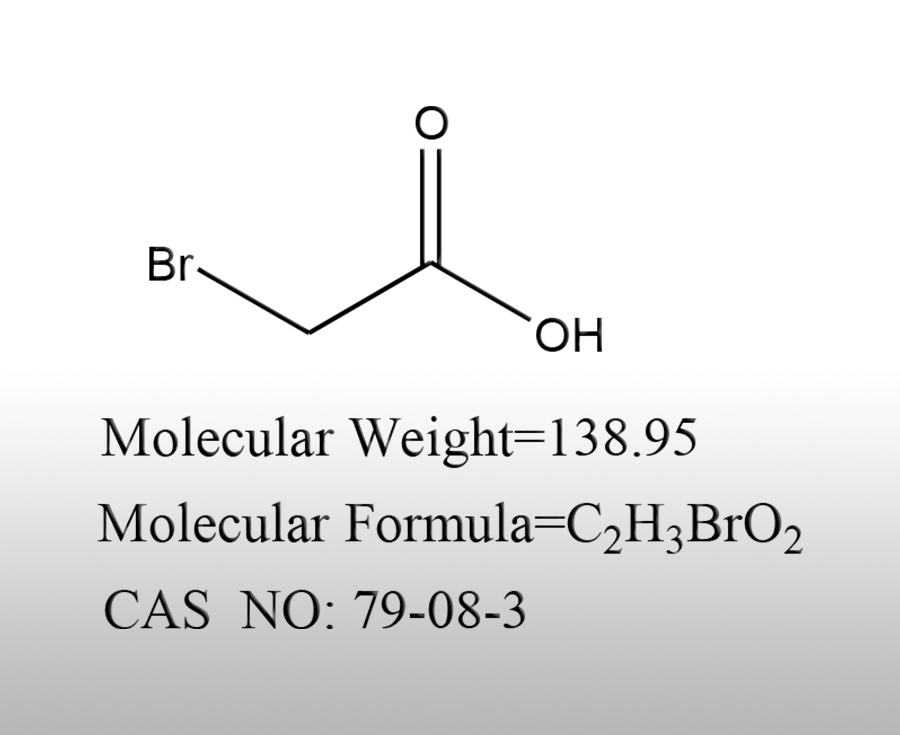
What are the commonly used analytical methods for purity testing of bromoacetic acid
1. Acid base titration methodSources:www.worldbrom.com | PublishDate:2026.10.20
Principle: Bromoacetic acid belongs to organic acids. It is titrated with standard NaOH solution, phenolphthalein as an indicator, and the total acid content is directly titrated to quickly calculate the main content of bromoacetic acid.
Advantages: Simple equipment, low cost, suitable for rapid detection in factory control;
Disadvantages: It can only measure total acidity and cannot distinguish acidic impurities such as bromoacetic acid, acetic acid, dibromoacetic acid, etc. It is suitable for samples with high purity and few impurities, and the results are higher when the impurities are complex.
2. High performance liquid chromatography (HPLC)
Using reverse phase chromatography, C18 or PFP pentafluorophenyl column, UV detector (200-220nm), and external standard method for quantification, impurities such as bromoacetic acid, acetic acid, dibromoacetic acid, and water can be directly separated to obtain the purity of the main components.
Advantages: No need for derivatives, simple sample preparation; Simultaneously quantify the main content and organic impurities;
Application: Factory quality inspection of chemical and pharmaceutical intermediates is a commonly used purity testing method in enterprises.
3. Ion chromatography IC (aqueous solution sample, determination of ionic impurities)
Anion exchange column, conductivity detector, suitable for separating and quantifying acidic ions such as bromoacetic acid, bromide ions, and acetate ions in aqueous solutions.
Suitable for detecting Br ⁻ ion impurities generated by hydrolysis; Solid samples need to be dissolved first and are mostly used for specialized detection of impurity ions, with less use for measuring the total purity of solid bromoacetic acid alone.
4. GC-ECD / GC-MS
Bromoacetic acid has poor thermal stability and cannot be directly injected. It must first undergo acidification extraction and methyl ester derivatization to convert it into methyl bromoacetate, and then be determined by gas chromatography ECD or GC-MS (national standard HJ758).
GC-ECD: High halogen sensitivity;
GC-MS: can qualitatively confirm and distinguish unknown impurities;
Disadvantages: The preprocessing is cumbersome, and the derivative steps bring errors, making it unsuitable for high purity detection of solid industrial products. It is mostly used for trace halogenated acetic acid detection.
5. LC-MS / UHPLC-MS/MS
Liquid phase tandem mass spectrometry, ESI negative ion mode, highly selective, low detection limit, used for qualitative analysis of trace impurities and structural confirmation. Generally not used for routine purity quantification, but for arbitration, impurity tracing, and pharmaceutical research and development sample analysis.
6. Auxiliary testing items (supporting purity report)
Moisture: Karl Fischer moisture determination;
Inorganic bromide ions: silver nitrate titration or ion chromatography;
Burning residue and heavy metals: undergo routine physical and chemical testing according to chemical standards.
Relevant articles
Related products
Recommended keywords:sodium bromate sodium bromide ammonium bromide sodium bromidesodium bromate potassium bromate Bronopol Bromine compounds worldbrom
Jiangsu Sodium Bromide | Shandong Sodium Bromide | Henan Sodium Bromide | Guangdong Sodium Bromide | Beijing Sodium Bromide | Anhui potassium bromide | Jiangsu Potassium Bromide | Shandong potassium bromide
Henan Sodium Bromate | Guangdong Sodium Bromate | Beijing Sodium Bromate | Anhui Sodium Bromate | Jiangsu ammonium bromide | Shandong ammonium bromide | Henan ammonium bromide |Guangdong Sodium Bromide| Beijing Sodium Bromide | Anhui Sodium Bromide
List labels:bromide sodium bromate Organic bromine sodium bromide sodium bromide calcium bromide ammonium bromide sodium bromate potassium bromate bromoacetic acid Bronopol
Copyright © 2021 Jiangsu Wode Chemical Co., Ltd

技术支持:Lange