

News Center
Popular products

Sales Department Tel:
0512-52836238
0512-52836128
0512-52358728
Sales Department Fax
0512-52836278
Sales Department Email
xu@worldbrom.com
Purchasing Department Tel/ Fax
0512-52836228
Headquarters Address US Office
, No. 18 Haitian Road, Advanced Material Industrial Park, Changshu City, Jiangsu
Tel
+1 832-857-1028
U.S. office mailbox
Lauren@worldbrom.com
shelia@worldbrom.com
U.S. office address
Creekside Park, The Woodlands, Texas 77375, USA
corporate website
www.worldbrom.com
0512-52836238
0512-52836128
0512-52358728
Sales Department Fax
0512-52836278
Sales Department Email
xu@worldbrom.com
Purchasing Department Tel/ Fax
0512-52836228
Headquarters Address US Office
, No. 18 Haitian Road, Advanced Material Industrial Park, Changshu City, Jiangsu
Tel
+1 832-857-1028
U.S. office mailbox
Lauren@worldbrom.com
shelia@worldbrom.com
U.S. office address
Creekside Park, The Woodlands, Texas 77375, USA
corporate website
www.worldbrom.com
Procurement Hotline
0512-52836128
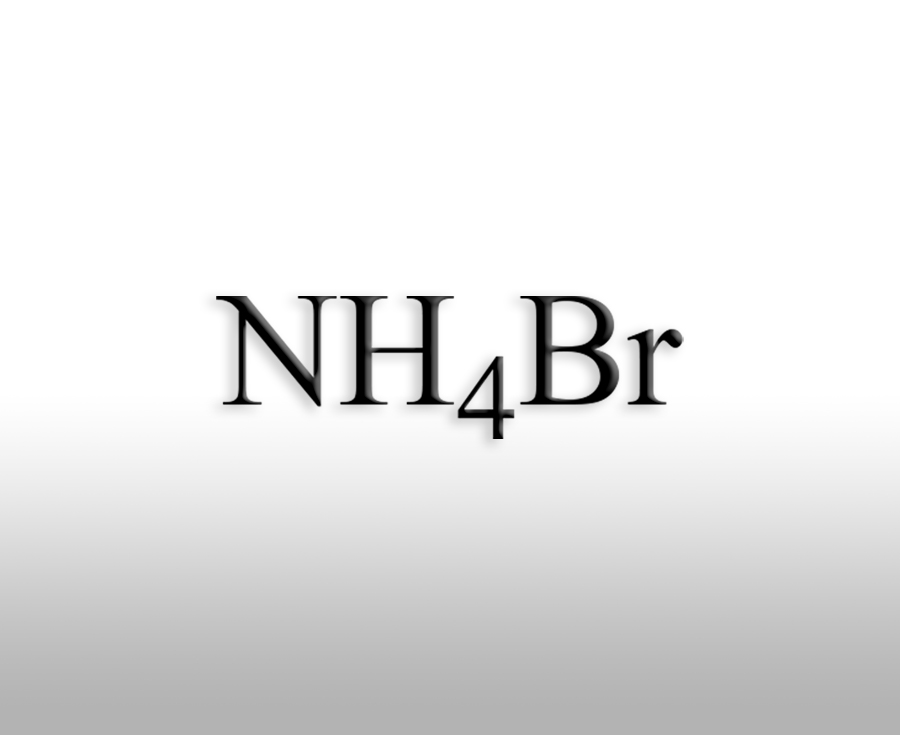
What are the production methods of ammonium bromide
1、 Bromine and ammonia synthesis method (mainstream industrial route in China)Sources:www.worldbrom.com | PublishDate:2026.08.11
Put water into the reaction kettle, mix it with liquid ammonia to form an ammonia water system, and maintain an environment of excess ammonia throughout the process. Slowly add bromine while continuously stirring, while strictly controlling the reaction temperature. After the reaction, adjust the pH of the system to eliminate free bromine and bromate impurities. The liquid is decolorized by activated carbon, filtered and purified, then concentrated by vacuum, cooled to precipitate crystals, and subjected to centrifugal separation and drying treatment to obtain the finished product.
Advantages: Adequate supply of raw materials, mature technology, suitable for large-scale continuous production.
Shortcomings: Significant exothermic reaction and high temperature control requirements; Bromine is a highly corrosive and high-risk raw material with high operational safety control standards. Improper process control can easily generate impurities.
2、 Hydrobromic acid and ammonia neutralization method (high-purity product process)
It can be divided into two forms: liquid-phase neutralization and gas-phase synthesis. Liquid phase process is the neutralization reaction of hydrobromic acid with ammonia or gaseous ammonia in a low-temperature environment; The gas-phase process involves direct contact between ammonia gas and hydrogen bromide gas to produce solid products.
After the reaction, the material can be finely filtered to remove impurities, concentrated and crystallized under reduced pressure, and dried at low temperature. High purity products often use gas-phase synthesis.
Advantages: Less side reactions, low impurity content in finished products, less free bromine, suitable for the production of high-purity ammonium bromide such as photosensitive materials and electronic materials.
Shortcomings: The raw material cost of hydrobromic acid is higher, production equipment needs to have strong anti-corrosion capabilities, and the investment cost of gas-phase synthesis production lines is higher.
3、 Double decomposition method (only used in laboratories and little batches of low-end products, not suitable for large-scale industrialization)
Using soluble metal bromide and ammonium salt raw materials for reaction, insoluble solid precipitate is generated during the reaction process. After filtering to remove the precipitate, the remaining solution is concentrated and crystallized to obtain ammonium bromide.
Advantages: Mild reaction conditions and low operational threshold.
Shortcomings: The raw material cost is relatively high, accompanied by the production of solid waste residue, and the product is prone to residual metal impurities, making it difficult to meet material usage standards. Generally, it is only used to prepare ordinary industrial reagents.
4、 Vacuum sublimation refining process (belongs to the purification process, not the synthesis route)
By utilizing the property of ammonium bromide that can sublime when heated, crude raw materials are heated and sublimated in a vacuum environment, and steam is re condensed and collected to separate heavy metals and non-volatile impurities. Often used as a deep processing method after the synthesis process to prepare electronic grade high-purity ammonium bromide.
Universal subsequent refining process (universal liquid-phase synthesis route)
The reaction material solution is first removed of heavy metal impurities, decolorized, and then subjected to precision filtration; Adopting vacuum concentration to avoid material decomposition caused by prolonged high temperature; Subsequently, cool and crystallize, centrifuge to remove the mother liquor, dry at low temperature, and finally sieve and package.
Relevant articles
Related products
Recommended keywords:sodium bromate sodium bromide ammonium bromide sodium bromidesodium bromate potassium bromate Bronopol Bromine compounds worldbrom
Jiangsu Sodium Bromide | Shandong Sodium Bromide | Henan Sodium Bromide | Guangdong Sodium Bromide | Beijing Sodium Bromide | Anhui potassium bromide | Jiangsu Potassium Bromide | Shandong potassium bromide
Henan Sodium Bromate | Guangdong Sodium Bromate | Beijing Sodium Bromate | Anhui Sodium Bromate | Jiangsu ammonium bromide | Shandong ammonium bromide | Henan ammonium bromide |Guangdong Sodium Bromide| Beijing Sodium Bromide | Anhui Sodium Bromide
List labels:bromide sodium bromate Organic bromine sodium bromide sodium bromide calcium bromide ammonium bromide sodium bromate potassium bromate bromoacetic acid Bronopol
Copyright © 2021 Jiangsu Wode Chemical Co., Ltd

技术支持:Lange